Achieving sub-micron particle distributions within civil engineering and industrial material testing requires a granular understanding of mechanical stress application. Materials such as high-density concrete cores, igneous aggregates, and sintered cement clinkers possess intense compressive strength but remain highly vulnerable to targeted shear and tensile shock waves.
When material preparation infrastructure is poorly calibrated, the kinetic energy delivered by the processing media converts into thermal dissipation rather than fracture propagation. This inefficiency results in surface deformation, micro-structural altering of the mineral composition, and high material contamination.
For laboratory directors and quality assurance managers, the true challenge lies in controlling the stress intensity and stress frequency distribution across the processed batch. Random, uncalibrated kinetic action leads to a wide, unpredictable particle distribution envelope. Downstream, this wide variance skews compressive strength testing, standard sieve validations, and chemical assay determinations.
If a batch contains localized clusters of over-pulverized fine particles or coarse, unbroken grains, the analytical results will not represent the true material composition, compromising the entire quality control framework.
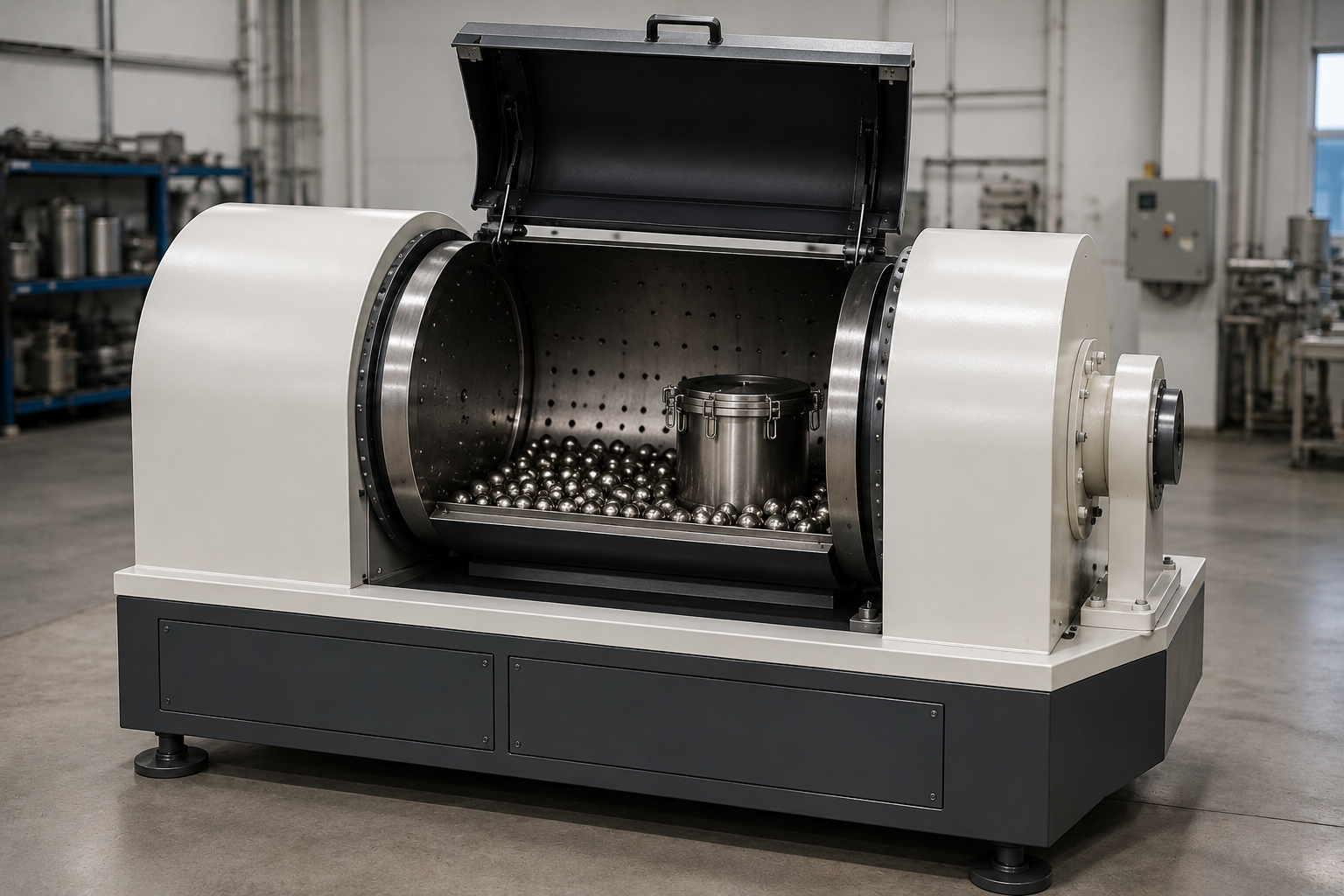
To establish reliable material validation, facility managers must move past trial-and-error processing methods. Optimizing the sample preparation phase requires strict control over the micro-mechanics occurring within the drum. By balancing the physical properties of the feed material with the internal mechanics of a high-performance Ball Milling Machine, laboratories can replace operational variability with predictable, repeatable, and high-throughput material reduction.
Mechanics of Fracturing: Impact and Friction Dissipation
The reduction of solid matter inside a rotating chamber relies on two main mechanical mechanisms: high-velocity impact (compressive shock) and continuous friction shear (attrition). High-velocity impact takes place when the grinding media breaks free from the cylinder wall at the apex of its rotation path, traveling along a parabolic trajectory before striking the material bed. This sudden application of force exceeds the material’s elastic limit, initiating rapid crack growth through structural flaws and grain boundaries to break down large aggregates.
In contrast, friction shear operates along the inner perimeter of the media bed. As the grinding spheres roll over each other and against the internal shell liners, they apply continuous frictional forces to the material trapped between them. This shearing action rubs off surface rough spots and polishes down small particles, shifting the sample toward a fine, uniform distribution.
Failing to balance these kinetic forces causes immediate operational issues. An over-emphasis on impact forces can shatter brittle media, crush delicate linings, and cause excessive fine particles to clump together. Conversely, relying too much on friction forces prolongs processing cycles, increases energy consumption, and overheats the material, which can alter moisture levels and skew subsequent laboratory tests.
The Physical Thresholds of Rotational Velocity
The behavior of the internal grinding charge is directly controlled by the angular velocity of the processing drum. Operating speeds are determined relative to the critical velocity threshold, which is the exact rotational speed where the internal centrifugal force matches the pull of gravity.
Managing this boundary determines whether the media charge delivers efficient particle reduction or simply wastes energy.
- Sub-Critical Cascading Motion: Operating well below the critical threshold means the media cannot break free from the drum wall. Instead, the charge slides and rolls along the rising side of the chamber, generating low-energy friction. While this motion works well for continuous fine polishing, it lacks the compressive shock needed to break down hard aggregate matrices.
- Optimal Cataracting Motion: Running the drum at sixty-five to seventy-five percent of critical velocity creates an efficient cataracting flight path. The media is lifted high up the drum wall before detaching and flying outward in a wide arc, striking the toe of the material charge. This zone maximizes both high-impact cracking and secondary attrition shearing.
- Super-Critical Centrifuging Motion: Pushing the system past its critical velocity limit ruins the comminution process entirely. The high rotational speed forces the grinding charge flat against the internal liners. The balls spin uselessly along with the drum wall, ending all relative movement, impact forces, and material reduction.
Carefully maintaining the system within the optimal cataracting range protects internal components from premature wear and stops energy from bleeding off as wasted heat. This stabilization ensures that input power is converted directly into material reduction, preserving the operational lifespan of the drive systems.
Grinding Media Mechanics and Chemical Purity
Selecting the correct media composition, geometry, and size distribution directly impacts the purity and throughput of the testing workflow. Using basic carbon steel media for hard minerals or concrete samples often causes high wear on the spheres. This wear introduces iron flakes into the sample matrix, which distorts chemical assays, X-ray diffraction tests, and structural baseline measurements.
To protect sample purity, modern testing facilities use wear-resistant materials like high-manganese steel alloys, abrasion-resistant chrome steels, or high-density alumina and zirconia ceramics. The size distribution of the grinding media must also be carefully matched to the feed size of the material.
A uniform charge of large balls will leave small spaces untouched, allowing fine particles to pass through unground, whereas a mixed charge combines large spheres to crack big pieces with smaller media to polish fine grains.
| Application Matrix | Media Metallurgy | Physical Mechanism | Contamination Profile |
| Crushed Concrete Testing | High-Chrome Manganese Steel | High Cascading Impact | Trace Iron (Acceptable for physical testing) |
| Abrasive Rock Core Analysis | Dense Sintered Alumina | Heavy Attrition Shear | Inert Oxide Traces (Protects assay purity) |
| Cement Clinker Production | Hardened Carbon Alloys | Mixed Shock & Friction | Minor Metallic Drifts (Suits standard checks) |
Quantifiable Improvements in Processing Efficiency
Upgrading to a balanced, precisely engineered material reduction system provides clear, measurable returns for testing laboratories and industrial plants. Replacing worn-out, uncalibrated processing hardware with high-efficiency machinery directly optimizes key performance metrics across the entire workflow.
Using variable-frequency drive controls along with optimized media shapes lowers energy demands by twenty to thirty-five percent. Eliminating unnecessary slipping between the media charge and the internal liners prevents energy from being lost as friction heat. This lower operating temperature preserves structural seals, prevents bearing grease breakdown, and reduces stress on the drive motor. These operational improvements also lead to a predictable reduction in unscheduled equipment maintenance.
Using high-durability liners and matched media charges reduces unexpected liner cracks and shell wear, cutting down on sudden maintenance shutdowns. This dependability allows facilities to run smooth testing programs, shorten batch turnaround times, and expand sample processing capacity without increasing labor costs.
Material Performance and Structural Analysis Systems
Building reliable sample preparation and testing equipment requires heavy-duty engineering, rugged structural designs, and durable wear materials. Across civil engineering and material manufacturing sectors, hardware must withstand constant physical strain while delivering fine, repeatable particle distribution.
The broader sample preparation system includes automated jaw crushers, heavy-duty disc grinders, high-efficiency sample splitters, and precision sieve shakers, which together form a reliable process line for structural material analysis. These industrial systems feature thick abrasion-resistant alloy plates, balanced drive shafts, and reinforced enclosures engineered to handle abrasive aggregates, construction materials, and rocky soils.
By controlling internal friction and keeping physical components aligned, this equipment eliminates common processing bottlenecks and prevents sample cross-contamination. This mechanical reliability allows testing laboratories, quality control departments, and research institutions to meet strict international testing standards while lowering long-term maintenance costs.
Material Characterization and Validation Principles
The core focus of modern material characterization is maintaining strict control over testing variables to ensure that every sample truly reflects the properties of the broader batch. When evaluating concrete mixes, aggregate resilience, or cement binding strength, the physical accuracy of the sample preparation phase shapes all subsequent testing data. Modern analytical instruments require highly uniform samples, meaning that any imperfections introduced during initial crushing or grinding will cause errors during structural compression tests or chemical evaluations.
Using properly calibrated processing infrastructure ensures that samples are broken down evenly without structural damage or chemical distortion. This high level of precision allows testing teams to confidently verify material performance against strict engineering tolerances and regulatory codes. By standardizing the sample preparation phase with durable, reliable equipment, facilities can protect their testing workflows from hidden errors, ensuring that every data point, strength report, and quality certification is built on a precise foundation.
For an in-depth look at the development, internal physics, and historical evolution of these industrial comminution systems, engineering teams can consult the extensive technical descriptions of ball mills to learn how these mechanics continue to support modern industrial applications.
FAQ’s
What criteria determine the choice between wet and dry milling configurations?
Dry milling is ideal for moisture-sensitive materials or when the final product must be a dry powder. Wet milling is preferred for ultra-fine particle sizes because the liquid base keeps particles dispersed, prevents caking along the walls, eliminates dust hazards, and increases throughput by twenty to thirty percent.
How do lifter bars improve the efficiency of a grinding cylinder?
Lifter bars are raised internal profiles bolted to the shell liner. They grip the media charge and lift it to the upper apex of the drum rotation, preventing the balls from sliding along the bottom wall and ensuring a proper cataracting drop.
What is the operational impact of overfilling a processing chamber?
Overfilling crowds the internal volume and dampens the fall of the media charge. The falling balls strike a thick bed of material rather than the hard toe of the charge, converting kinetic energy into heat rather than fracturing the material.
How often should grinding media and internal liners be inspected for wear?
Inspection schedules depend on material abrasiveness and operational hours. High-abrasion applications like crushed quartz testing require monthly visual inspections, while softer limestone operations can run for several months between checks.
Why does iron contamination occur, and how can it be prevented?
Iron contamination happens when low-grade carbon steel media wears down against hard aggregates, leaving iron dust in the sample. This can be prevented by using high-purity alumina, zirconia ceramic, or high-chrome steel alloys.
What is the critical velocity of a milling cylinder, and why is it important?
Critical velocity is the theoretical rotational speed where internal centrifugal force equals gravity. Knowing this boundary allows operators to set running speeds just below it, keeping the machine in the efficient cataracting zone.
Can ductile or highly elastic compounds be processed in a standard ball mill?
Ductile materials tend to flatten out rather than fracture under impact forces. Processing these materials requires cryogenic milling, where liquid nitrogen is introduced to embrittle the sample before grinding begins.
How does media size selection affect final particle size distribution?
Large grinding spheres provide the high impact momentum needed to crack coarse feed materials, while smaller balls offer a high surface area to grind down fine grains. A balanced mix of sizes ensures a uniform final powder.
What causes material to cake or stick inside the drum?
Caking is usually caused by residual moisture or static charges between very fine particles. This can be fixed by drying the feed material thoroughly, using chemical grinding aids, or switching to a wet milling process.
Can these material processing systems run continuously in laboratory environments?
Yes, systems built with heavy-duty gearboxes, balanced drive shafts, and cooled bearing assemblies are engineered for continuous operation, provided users follow proper lubrication schedules and loading limits.
Conclusion
Maximizing efficiency in material preparation demands a complete understanding of the mechanical forces driving industrial ball milling machines. By precisely balancing impact and attrition forces through exact rotational velocity management, laboratories can eliminate the structural variables that skew testing results. Utilizing premium, wear-resistant media metallurgy and advanced lining alloys protects the physical integrity of samples and guards against trace element pollution. This systematic approach transforms sample preparation from an unpredictable operational bottleneck into a highly reliable, high-throughput component of the material validation process.
Implementing these structural changes produces direct, measurable operational improvements across key production metrics. Calibrating the internal movement of the media charge yields up to a thirty-five percent reduction in energy waste while significantly lowering the thermal stress applied to driving motors and gear assemblies. Minimizing mechanical slippage and unexpected component wear creates a highly stable processing line, reducing unscheduled maintenance shutdowns and allowing testing facilities to scale up their capacity without increasing labor overhead.
Investing in ruggedly engineered, heavy-duty material testing infrastructure remains crucial for facilities seeking long-term operational reliability and strict compliance with global testing codes. Utilizing dependable, high-durability comminution systems enables quality control labs and engineering firms to protect their workflows from structural processing errors. Elevating sample preparation standards allows industrial teams to establish complete accuracy across their testing procedures, ensuring that every compressive test, assay report, and material certification is built on a precise foundation. To review the mechanical design principles and historical engineering behind these comminution drums, laboratory managers can explore the foundational mechanics of ball mills to see how these designs continue to support modern industrial material processing.