Foundry practices have undergone dramatic shifts as industrial demands move toward complex geometries and near net shape components. Traditional sand casting served manufacturing requirements for centuries, yet the necessity for complex internal passages and zero draft architectures exposed clear limitations that hampered innovation. The introduction of evaporative pattern techniques changed how engineers approach complex components, offering a path away from restrictive manufacturing conventions.
By replacing reusable wood or metal tooling with expendable polymer models, facilities bypass many constraints of traditional mold extraction, allowing for unparalleled geometric fluidity. This methodology relies on a pattern remaining fixed inside the unbonded sand during the setup phase, eliminating parting lines, flashing, and the traditional need for core assembly. As a direct result, the structural integrity of the final piece increases while finishing operations drop significantly, streamlining production workflows.
Early iterations of this approach struggled with consistency, but systemic shifts in pattern stabilization and sand compaction tables have elevated the process to a primary choice for high volume automotive and heavy industrial sectors. The modern industrial landscape values this process for its design freedom, allowing multiple separate components to combine into a single, unified structural element.
This integration eliminates separate machining steps, fasteners, and assembly tolerances, lowering long term costs over extended production runs. Understanding how these patterns respond to intense thermal energy requires looking closely into the molecular composition and behavioral traits of the foam itself.
Material Science Enhancements in Expanded Polystyrene Production
The performance of an evaporative casting system depends fundamentally on the properties of the expanded polystyrene used to create the initial pattern. Standard beads undergo a careful pre expansion phase where steam application fills the material with air, resulting in a lightweight composition that is roughly ninety seven percent air and a tiny fraction of solid polymer.
Historically, simple expanded polystyrene patterns left a heavy carbon residue when subjected to the intense heat of molten ferrous metals, causing a common defect known as lustrous carbon that compromised mechanical strength. To resolve this structural problem, material scientists developed specialized copolymers combining polystyrene with polymethyl methacrylate. This copolymer blend undergoes complete vaporization when encountering liquid metal, drastically reducing solid soot and leaving clean, unblemished internal surfaces free from defects.
The control of bead density remains an important operational balance that engineers must monitor continuously. Lower density foam allows rapid vaporization and smoother metal advancement, though it compromises the rigidity of the pattern, making it vulnerable to distortion during sand compaction.
Conversely, dense foam creates strong resistance against the advancing liquid alloy, which can cause incomplete fills or cold shuts in thin walled sections. Striking the ideal density balance ensures the foam pattern withstands high physical pressures while still turning instantly into gas without altering the chemical composition of the alloy.
Refractory Coating Innovations and Defect Mitigation
Applying a refractory coating to the exterior of the foam pattern remains one of the most critical steps in ensuring accurate dimensioning and flawless surfaces. This slurry layer serves as a multi functional barrier between the loose sand particles and the oncoming molten stream, providing vital insulation and containment. Modern formulations use precise combinations of silica, alumina, or zircon suspended in a liquid carrier, applied uniformly via automated dipping, brushing, or spraying systems to achieve a perfect finish.
The coating thickness must be managed with absolute precision because its permeability governs the escape velocity of the gasified polymer during the pour. If the refractory shell is too dense, the expanding gases cannot vent into the surrounding unbonded sand quickly enough, creating backpressure that slows the metal flow and causes dangerous gas porosity defects.
If the coating is too thin or lacks structural strength, the immense weight of the compacted sand can crush the delicate foam details prior to pouring, or the intense heat of the alloy can cause sand erosion, ruining the surface finish completely. Innovations in nanocoatings have introduced smart barriers that offer superior insulation, preventing the metal from losing thermal energy too quickly. This prevents premature solidification, allowing complex internal networks to fill completely and ensuring predictable, high quality material characteristics throughout the component.
Precision Engineering with Advanced Slicing and Assembly
For low volume or prototyping runs, engineers often shape patterns directly from solid blocks using computer guided hot wire tools or multi axis machining centers. High volume industrial manufacturing, however, demands automated shape molding machines that produce identical components with high speed and minimal variance. When a component features internal voids so complex that a single mold cannot produce them, designers split the model into distinct slices that capture every nuance. These individual segments are molded separately and subsequently joined using specialized hot melt adhesives that match the thermal characteristics of the foam.
Automated robotic systems apply these adhesives with extreme accuracy, preventing excess glue from squeezing out of the seams, as any external residue replicates as a prominent surface defect on the finished metal piece. In a similar manner, creating high density templates for other heavy industries requires similar dimensional fidelity and material selection.
For example, when laboratories require a precise, lightweight single use polystyrene mould to cast consistent concrete samples for compressive strength evaluations, they rely on similar high density bead expansion technology to ensure absolute dimensional accuracy. This ensures that every test specimen satisfies strict geometric tolerances without needing separate release agents or intensive cleanup procedures. Within industrial foundries, individual foam models are attached to a central foam runner system, creating a dense pattern tree that allows a single pour to fill dozens of separate components concurrently, maximizing throughput.
Controlling Density and Thermal Behavior During Pouring
The actual pouring stage represents a highly dynamic thermodynamic event where liquid metal replaces the solid polymer pattern in real time. Unlike investment casting where wax is removed prior to pouring, this process requires the molten alloy to actively vaporize the foam as it fills the flask. This introduces unique fluid dynamic challenges, as the front of the liquid metal must transfer enough heat to break the polymer chains into gas without causing excessive turbulence or cooling the metal too rapidly.
Pouring temperatures must be maintained significantly higher than traditional sand casting to provide the necessary thermal energy for instantaneous vaporization. If the temperature drops below a critical threshold, the foam will melt into a viscous liquid rather than gasifying, resulting in severe entrapment defects and carbon inclusions that ruin the casting. Modern foundries use automated pouring basins that maintain a constant pressure head, ensuring a steady, continuous advance of the liquid front.
This consistent velocity prevents the unbonded sand from collapsing into the cavity during the critical moments of exchange. Controlled directional solidification happens naturally because the metal entering the mold first loses energy while vaporizing the foam, creating a thermal gradient that minimizes internal shrinkage cavities and yields highly predictable grain structures.
Environmental and Structural Efficiency Benefits
Adopting advanced foam pattern fabrication offers significant ecological and economic advantages that align with modern sustainable manufacturing goals and resource management. Traditional foundries require massive amounts of chemical binders, resins, and clays to keep the sand molds rigid, creating substantial chemical waste and making sand reclamation expensive and energy intensive. This process relies on loose, unbonded sand that contains zero chemical additives, reducing operational overhead.
After the metal solidifies, the flask is inverted, and more than ninety five percent of the sand is instantly reclaimed, cooled, and returned to the production loop without complex processing. Air quality within the facility is improved by using negative pressure ventilation systems connected to the flasks. These systems capture the vaporized polymer gases and route them through filtration and combustion purifiers, preventing harmful organic compounds from entering the workspace or the atmosphere.
Beyond environmental benefits, the complete absence of draft angles and parting lines eliminates the formation of flash, reducing post cast grinding and machining by a substantial margin. Components leave the foundry near their final shape, reducing raw material consumption, minimizing tool wear during finishing, and significantly reducing overall energy expenditure across the entire production timeline.
High Precision Material Quality Verification Protocols
Maintaining structural integrity across civil engineering and manufacturing projects requires robust testing regimens that mirror the precision used in advanced foundry environments. Quality control professionals rely on standardized specimen collection to verify that raw materials meet structural load requirements before full scale deployment occurs.
Specialized manufacturing facilities provide these critical sectors with top tier materials testing and sample preparation equipment designed for extreme accuracy under demanding field conditions. Among these essential tools are disposable, high density polystyrene cube moulds, available in standard one hundred millimeter and one hundred and fifty millimeter configurations, which offer a lightweight and highly efficient alternative to traditional heavy steel or cast iron casting equipment.
These disposable single use templates eliminate the need for chemical release agents, eliminate cross contamination risks between different batches, and prove exceptionally useful on active construction sites or high volume laboratories lacking dedicated cleaning systems.
By providing a stable, durable environment for fresh concrete to cure, these precisely engineered tools ensure that strength testing specimens remain perfectly true to form. This rigorous attention to material performance helps industrial operations maintain strict quality standards, protect project safety, and secure predictable performance across demanding structural applications.
FAQ’s
What distinguishes expandable polystyrene from traditional investment casting materials?
Traditional investment casting relies on wax patterns that must be melted out of the mold cavity before any liquid metal is poured. In contrast, expandable polystyrene patterns remain inside the mold, vaporizing instantly upon direct contact with the incoming molten alloy. This eliminates the time-consuming bake-out phase and reduces tooling wear.
How do foundries prevent sand from collapsing during foam vaporization?
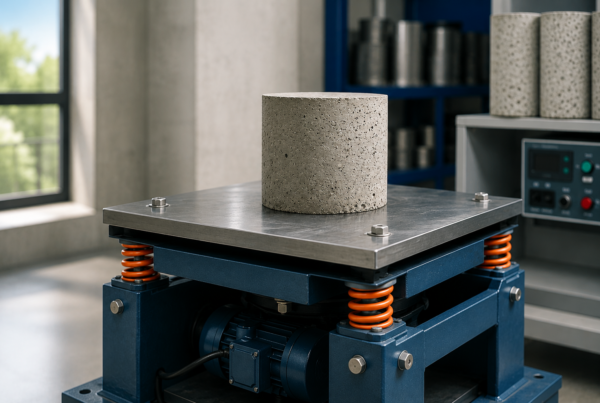
Foundries utilize unbonded sand that is thoroughly compacted using high-frequency vibration tables to ensure high stability around the foam pattern. During pouring, a continuous pressure head and negative pressure vacuum systems within the flask maintain sand alignment while the foam transforms into gas, preventing walls from collapsing.
Can this fabrication process be applied to ferrous and non-ferrous alloys?
Yes, this process is highly versatile and accommodates a wide array of materials, including cast irons, aluminum alloys, carbon steels, nickel alloys, and copper alloys. The primary operational adjustment involves tailoring the pouring temperatures and refractory coating permeability to match the specific thermal properties of the chosen metal.
Why is bead size and expansion uniformity critical for industrial patterns?
The size and uniformity of the polystyrene beads dictate the final surface texture and dimensional tolerance of the cast part. Non-uniform expansion can create localized variations in pattern density, leading to incomplete vaporization, surface roughness, or structural weaknesses within the finished metal component.
Conclusion
Modern industrial casting achieves unprecedented precision by merging advanced polymer chemistry with rigorous thermodynamic controls. The transition from conventional patterns to sophisticated expandable polystyrene models reflects an industry wide commitment to waste reduction, structural consolidation, and design flexibility. By eliminating the necessity for internal cores and complex parting lines, manufacturers can execute intricate geometries that were previously deemed impossible or financially non viable.
Refining these fabrication processes requires continuous attention to detail, from adjusting bead density to optimizing the permeability of refractory coatings. The steady evolution of copolymer materials ensures that defects are minimized, creating a reliable foundation for critical components used in automotive, aerospace, and civil engineering infrastructure. Implementing high density structural templates further guarantees that material performance is verified with absolute consistency across all industrial sectors.
Embracing these innovations positions modern facilities to achieve sustainable, lean production goals while maintaining flawless dimensional accuracy. The integration of digital modeling and automated assembly systems ensures that lost foam casting remains a cornerstone of high performance component manufacturing. As engineering demands become more stringent, the role of precision engineered polymer fabrication will undoubtedly expand, driving further breakthroughs in material science and structural design.