Fresh concrete can look perfectly consistent from one batch to the next, yet its behaviour during placement may tell a different story. Workability can change because of water content, aggregate characteristics, temperature, admixtures, mixing time, and the time between batching and testing. That is why simple, repeatable tests are so important when checking fresh concrete.
A concrete flow test helps give a practical picture of how easily fresh concrete spreads under a defined testing method. It can be especially useful when working with mixes designed to move readily around reinforcement, fill awkward sections of formwork, or achieve a consistent spread without excessive manual effort. A good result is not simply a number on a test sheet. It provides useful information about the concrete’s consistency and whether it is behaving as expected.
For anyone trying to understand flow test concrete properly, the key point is that the test should be treated as a controlled measurement rather than a quick visual check. The quality of the equipment, preparation of the sample, testing surface, timing, and operator technique can all influence the final result. A reliable method therefore starts long before the measurement itself.
What Is a Concrete Flow Test?
A concrete flow test is used to assess the workability and flow characteristics of fresh concrete. Instead of focusing only on how much the concrete settles, the test looks at how the material spreads when subjected to a specified testing action.
This makes flow testing useful for mixes that are more fluid than traditional concrete and for applications where the ability to spread is an important part of placement. It can help technicians identify changes between batches and provide a consistent way of recording fresh concrete behaviour.
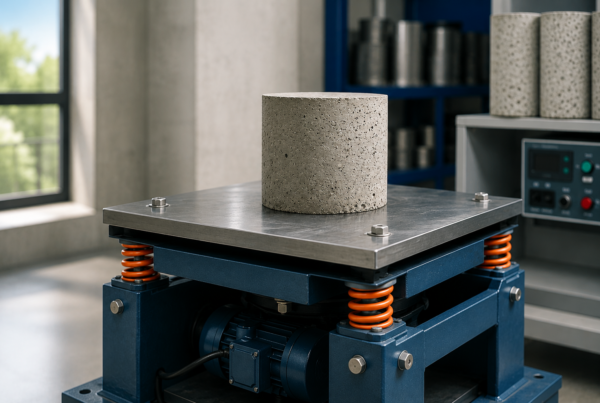
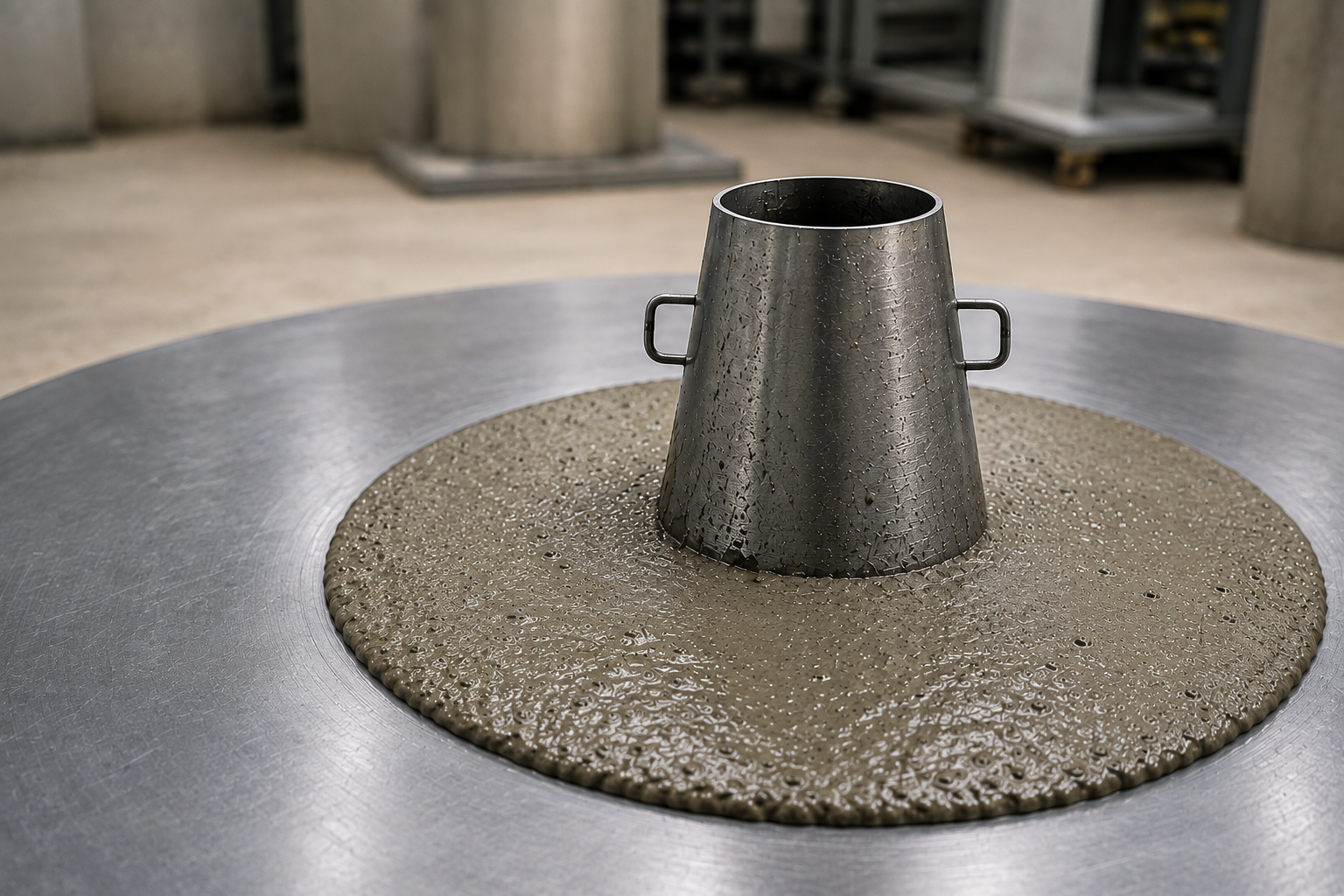
The exact procedure depends on the type of concrete and the testing method being used. A flow table test, for example, uses a defined mould and table arrangement to produce a controlled movement in the fresh sample before the resulting spread is measured. Standardised flow testing methods help make results easier to compare between different samples and testing occasions.
Why Concrete Flowability Matters on a Project
Concrete needs to be workable enough to reach the required areas while still retaining the properties expected from the mix design. If a mix is too stiff, it may be difficult to place, level, or consolidate properly. If it is excessively fluid, there may be concerns about segregation, consistency, or whether the concrete is behaving differently from the intended design.
Flowability becomes even more important where concrete has to move through restricted spaces. Dense reinforcement, complex formwork, narrow sections, and difficult access points can all make placement more challenging.
A consistent flow result can therefore provide an early indication of whether a fresh batch is behaving within the expected range. It does not replace strength testing or other quality checks, but it adds another useful piece of information when assessing fresh concrete.
How a Flow Table Test Works
A typical flow table test is based on allowing a prepared concrete sample to spread after a controlled movement of the testing apparatus. The sample is placed into a mould on a suitable surface, following the required preparation procedure. Once the mould is removed and the test action is completed, the spread of the concrete is measured.
The measurement gives an indication of the material’s flowability under the conditions defined by the method. The result can then be recorded and compared with the expected value for the particular concrete mix.
The process may appear straightforward, but consistency is essential. Small differences in sample preparation or test handling can affect the spread. This is why standard procedures place importance on equipment condition, surface preparation, sample handling, and measurement technique.
For UK testing environments, flow table testing forms part of the standard methods used for fresh concrete assessment under BS EN 12350-5. Following the relevant project standard is important because the test method, equipment, and interpretation need to match the specification being applied.
Preparing the Concrete Sample Properly
A reliable test begins with a representative sample. The material being tested needs to reflect the batch being assessed rather than containing only a convenient portion of the mix.
Sampling should be carried out carefully so that the concrete does not segregate before the test begins. Large aggregate particles, cement paste, and water should remain distributed as naturally as possible.
The sample also needs to be protected from unnecessary delays. Fresh concrete changes with time, particularly as hydration continues and the material gradually loses workability. Long gaps between sampling and testing can therefore produce a result that does not accurately represent the concrete’s condition when it was originally sampled.
Environmental conditions matter as well. Hot weather, strong sunlight, wind, and an unsuitable testing surface can influence the sample. A clean, stable, level testing area is essential for obtaining repeatable results.
The Importance of a Clean and Suitable Test Surface
The surface supporting the test equipment is easy to overlook, but it can have a direct effect on the behaviour of the sample.
If the surface is dirty, uneven, excessively wet, or contaminated with hardened concrete, the sample may not move as intended. Material can catch on rough areas, while unwanted moisture can affect the boundary between the concrete and the testing surface.
Before testing, the working surface should therefore be clean and properly prepared according to the applicable procedure. For specialised flow testing involving highly fluid concrete, maintaining appropriate surface conditions is particularly important because the concrete interacts closely with the testing surface as it spreads.
This is also why equipment should not simply be cleaned at the end of a testing session. It should be checked before the next test so that old material, surface damage, or contamination does not become part of the measurement.
Equipment Quality Can Affect the Result
Testing equipment is sometimes treated as an accessory to the testing process. In reality, it forms part of the measurement system.
A mould that is distorted, worn, or damaged may not hold the sample correctly. A testing table that does not move consistently can introduce differences between tests. Even small imperfections can become more significant when testing has to be repeated over a large number of batches.
Smooth surfaces are especially important. Hardened cement residue can create rough areas that interfere with the movement of fresh concrete. Regular cleaning helps, but aggressive cleaning methods can also damage metal surfaces if they scratch or remove protective coatings. This can eventually change the condition of the equipment itself.
For this reason, equipment inspection should be part of routine quality control rather than something done only after a questionable result.
A Step-by-Step Approach to Better Flow Testing
Although procedures vary according to the applicable standard, a reliable testing routine generally follows a logical sequence.
First, make sure the equipment is clean, undamaged, and ready for use. Check that the test area is stable and that all required measuring tools are available before the sample is prepared.
Next, obtain a representative fresh concrete sample and begin the test without unnecessary delay. Follow the specified method for filling and handling the mould. Avoid introducing additional water or altering the sample during preparation.
Once the sample has been positioned correctly, carry out the required movement of the test apparatus. The action needs to be consistent rather than improvised. The purpose of a standardised movement is to ensure that different samples can be compared under similar conditions.
After the concrete has completed its movement, take the required measurements carefully. Record the result along with useful information such as the sample identification, time of test, and relevant environmental conditions.
Finally, clean the equipment immediately after use. Hardened concrete left on testing surfaces can become difficult to remove and may affect future tests.
Common Problems That Can Distort Flow Results
Some inaccurate results come from obvious equipment problems, but many develop through small procedural mistakes.
One common issue is using a surface that is not level. Fresh concrete naturally responds to gravity, so an uneven surface can make the resulting spread appear different from what it would be under controlled conditions.
Another problem is allowing the sample to stand for too long before testing. A mix that loses workability during the delay may produce a lower flow result even though the batch itself was acceptable when sampled.
Inconsistent handling can also create variation. Two operators may obtain noticeably different results when one uses a different filling technique or applies the test action differently.
Dirty equipment is another frequent cause of trouble. Cement paste can harden quickly on metal surfaces, while aggregate particles can become trapped around edges and joints. These deposits can change the way the sample interacts with the equipment.
Environmental conditions should not be ignored either. High temperatures may accelerate workability loss, while strong wind can contribute to surface drying. Testing should be carried out under controlled conditions whenever reasonably possible.
Flow Results and Concrete Consistency
A flow value becomes more useful when it is considered alongside other project information.
A single result does not always explain why concrete behaved differently. A change in flow might be associated with variations in aggregate moisture, mix proportions, temperature, admixture performance, or the time since mixing.
That is why testing trends can be more informative than isolated numbers. Recording results from successive batches helps engineers and technicians identify unusual changes that may warrant further investigation.
For example, several results gradually moving outside the expected range may suggest a developing issue with consistency. A sudden change between otherwise similar samples may indicate a specific event, such as a change in material condition or an issue during handling.
The test therefore works best as part of a wider quality-control process rather than as a standalone pass-or-fail exercise.
How Testing Supports Better Site Decisions
Fresh concrete testing gives project teams useful information before the material becomes part of the finished structure.
If concrete is difficult to place, the problem may become much more costly after it reaches the formwork. Poor flow can contribute to areas that are difficult to fill properly, particularly where access is restricted.
Regular testing can provide an opportunity to identify unexpected changes earlier. Instead of relying entirely on appearance or operator experience, the team has measurable information that can be documented and compared.
This is especially useful on projects where multiple batches are delivered across different days or where several pours need to achieve similar characteristics. A consistent testing routine makes it easier to monitor whether fresh concrete continues to perform as intended.
Choosing Equipment for Reliable Testing
When selecting flow testing equipment, focus on accuracy, durability, ease of cleaning, and suitability for the required testing method.
The equipment should be manufactured to appropriate dimensions and should remain stable during repeated use. Surfaces that contact fresh concrete need to be smooth and easy to clean. Components should also be strong enough to withstand routine handling without becoming distorted.
Good equipment should make the correct procedure easier rather than introducing unnecessary complications. A stable table, properly formed mould, suitable measuring equipment, and clean working surface all contribute to better repeatability.
It is also worth considering how often the equipment will be used. A laboratory carrying out regular testing may need equipment designed for heavy and repeated use, while occasional site testing may place greater emphasis on portability and simple maintenance.
Looking After Concrete Testing Equipment
Regular maintenance can extend equipment life and help protect testing accuracy.
After each use, remove fresh concrete before it hardens. Clean surfaces thoroughly without using methods that can cause unnecessary scratching or deformation.
Check moulds for dents, cracks, distortion, and excessive wear. Examine the testing table for movement problems and make sure the operating mechanism remains consistent.
Storage also matters. Equipment left exposed to moisture, impact, or harsh site conditions may deteriorate faster than equipment stored in a clean and protected area.
Periodic inspection should be documented, particularly where testing results form part of formal quality records. If equipment appears damaged or its performance becomes questionable, it is better to investigate or replace it than to continue generating results that may later be challenged.
Where Flow Testing Fits Into Concrete Quality Control
Flow testing is one part of a much larger concrete quality-control system.
Fresh concrete may also be assessed for properties such as temperature, air content, slump, and other workability characteristics depending on the project requirements. Hardened concrete can then be assessed through additional testing methods to confirm properties such as compressive strength.
Each test provides different information. Flow testing focuses on how fresh concrete behaves under the conditions of the specified method. Strength testing focuses on the performance of hardened specimens. Neither should be treated as a replacement for the other.
The real benefit comes from using the results together. When fresh and hardened concrete records are maintained consistently, project teams can build a clearer picture of material performance from delivery through to final verification.
Practical Tips for More Consistent Results
A few simple habits can make a noticeable difference to the quality of testing.
Always inspect equipment before starting. Prepare the working area first so the sample is not left waiting while equipment is assembled or cleaned.
Use a representative sample and follow the specified procedure exactly. Avoid shortcuts that might seem harmless during a busy testing session.
Keep measurements clear and consistent. Record results immediately rather than relying on memory later.
Clean equipment after every test and inspect it regularly for damage. If several operators perform testing, make sure everyone follows the same procedure.
Most importantly, treat unusual results as information rather than immediately assuming that either the concrete or the equipment is at fault. Check the sample, procedure, environmental conditions, and equipment before drawing conclusions.
Getting Reliable Flow Test Equipment
Reliable testing depends on more than knowing the correct procedure. The equipment used to carry it out needs to be suitable, durable, and maintained properly throughout its working life.
Capco provides concrete and materials testing equipment designed for laboratory and site applications, including equipment used for fresh concrete testing. Its range can be useful for organisations looking to keep their testing setup properly equipped while maintaining a consistent approach to routine measurements.
The main focus, however, should always remain on matching the equipment and procedure to the relevant testing standard and project requirements.
Wrapping Up
Concrete flow testing provides a practical way to assess the behaviour of fresh concrete and monitor consistency from one batch to another. When performed correctly, it can help identify changes in workability before they become larger placement or quality issues.
Accurate results depend on several factors working together. Representative sampling, clean surfaces, good equipment, consistent handling, correct timing, and regular maintenance all matter.
The best results come from treating testing as a controlled part of quality management rather than a quick measurement taken only when there is a problem. With the right equipment and a disciplined procedure, flow testing can provide useful information that supports better concrete placement and more dependable project records.