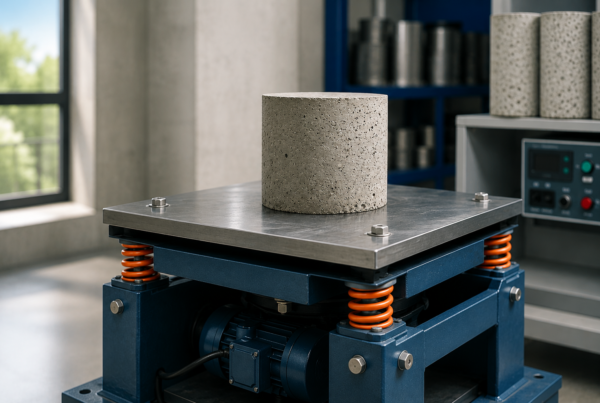

Concrete may look simple once it has been poured and cured, but knowing whether it is strong enough for its intended use requires proper testing. Concrete strength testing provides valuable information about the quality, consistency, and performance of a concrete mix. One of the most common methods involves preparing concrete cubes and testing them under controlled conditions.
For construction professionals, laboratories, engineers, and quality control teams, accurate cube preparation is just as important as the testing process itself. Small mistakes during sampling, filling, compacting, curing, or handling can affect the final result. That is why the equipment used to create test specimens needs to be reliable, suitable for the job, and handled correctly.
A concrete cube mould is an essential piece of equipment in this process because it provides the controlled shape and dimensions needed to produce consistent concrete test specimens. The mould holds freshly mixed concrete while it is compacted and allowed to develop its initial strength before the specimen is removed and cured. Using the right mould helps reduce variation between samples and supports more dependable test results.
What Is Concrete Cube Testing?
Concrete cube testing is a common laboratory and site quality-control procedure used to determine the compressive strength of concrete. A sample of fresh concrete is placed into a cube-shaped mould, compacted properly, and left to set. After demoulding, the specimen is cured for a specified period before being subjected to a compressive load.
The purpose is straightforward: determine how much compressive force the concrete can withstand before failure.
The resulting strength value can then be compared with the required strength for the particular concrete mix or construction application. Testing is generally carried out at specified ages, commonly including an early-age test and a later-age test, depending on the project requirements and applicable testing procedure.
Cube testing does not simply tell you whether a piece of concrete is strong or weak. When carried out consistently, it can also help identify variations in concrete production and highlight potential problems with materials, mixing, placement, compaction, or curing.
Why Concrete Strength Testing Matters
Concrete is expected to perform reliably for many years. If its actual strength is significantly below the required level, the consequences can be serious.
Strength testing provides an opportunity to identify problems before they become larger construction issues. It can help quality teams determine whether a concrete batch is performing as expected and whether production remains consistent.
Testing can also provide useful evidence for quality documentation. Construction projects often involve multiple concrete pours, materials, workers, and environmental conditions. Keeping proper test records makes it easier to trace the performance of individual batches and investigate unusual results.
The value of testing therefore goes beyond obtaining a single number. It contributes to better quality control and gives engineers and project teams useful information when assessing concrete performance.
Understanding the Concrete Cube Mould
The mould is one of the simplest components in cube testing, but its role is extremely important. Its job is to create a specimen with controlled dimensions and a consistent shape.
A suitable mould should be strong enough to withstand repeated use without becoming distorted. Its internal surfaces should allow the concrete specimen to be formed consistently, while its construction should make filling, compaction, stripping, and cleaning practical.
If a mould becomes damaged or distorted, the dimensions of the specimen can be affected. Even small inconsistencies can create difficulties when comparing results from different samples.
The mould also needs to be easy to assemble and dismantle. Poorly maintained moulds can make demoulding difficult and may damage the specimen before curing even begins.
Common Cube Mould Sizes
Concrete cube testing commonly uses standard cube dimensions established by the relevant testing requirements. The exact size selected depends on the applicable standard, testing method, aggregate characteristics, and project requirements.
Common laboratory cube moulds include:
- 50 mm cubes for certain specialised applications
- 100 mm cubes
- 150 mm cubes
The 150 mm cube is widely associated with conventional concrete strength testing, while smaller specimens may be used where permitted by the relevant procedure.
The important point is not simply choosing a mould based on convenience. The specimen size should match the testing method and requirements being followed. Consistency is also essential when comparing results.
Main Features of a Good Cube Mould
A well-designed mould should make the entire sampling process easier and more repeatable.
Strong Construction
Concrete is heavy and exerts pressure against the mould during filling and compaction. A mould needs sufficient strength to maintain its shape during use.
A weak or poorly constructed mould may flex or deform, resulting in specimens that do not have the intended dimensions.
Accurate Dimensions
Dimensional accuracy is fundamental to reliable testing. The mould should produce specimens of consistent size so that calculated strength values are not affected by avoidable dimensional differences.
Smooth Internal Surfaces
The internal faces should be reasonably smooth and free from major defects. This helps produce specimens that can be removed without unnecessary damage.
Secure Assembly
The mould should remain firmly assembled while concrete is being placed and compacted. Loose connections can cause leakage or movement, both of which can affect the finished specimen.
Easy Demoulding
Once the concrete has gained sufficient initial strength, the specimen needs to be removed carefully. A practical mould design makes this process easier while reducing the risk of damaging the cube.
Preparing the Mould Before Use
Good test results start before the concrete reaches the mould. Before each use, inspect the mould for damage, distortion, corrosion, excessive wear, or concrete residue. The surfaces should be clean and properly prepared according to the relevant testing procedure.
Any parts that need assembly should be secured correctly. The mould should sit on a stable and level surface during filling. Preparation may seem like a minor step, but it helps establish consistency between specimens. A poorly prepared mould can introduce problems that later appear to be related to the concrete itself.
Sampling Fresh Concrete
The test specimen should represent the concrete being assessed. For this reason, sampling needs to follow the relevant testing procedure rather than simply taking an arbitrary portion of concrete. Fresh concrete should be properly mixed before the sample is collected. The sample should then be handled promptly so that unnecessary changes in the concrete do not occur before moulding.
Segregation is particularly important to avoid. If coarse aggregate settles or mortar separates from the mix, the sample may no longer accurately represent the concrete from the batch. The goal is simple: the test cube should provide a fair representation of the concrete being placed in the structure.
Filling the Cube Mould
Once the sample has been obtained, the mould is filled according to the applicable procedure. Concrete is normally introduced in specified layers rather than being placed randomly in one large mass. Each layer needs appropriate compaction to remove unwanted air voids and achieve a properly consolidated specimen.
The exact number of layers and compaction method should always follow the testing standard being used. Overworking the concrete can be just as undesirable as insufficient compaction. The aim is controlled and consistent consolidation rather than simply applying as much force as possible.
Why Proper Compaction Is Important
Air trapped inside a concrete test specimen can affect its density and strength. If one cube is compacted differently from another, the resulting strength values may not be directly comparable. Insufficient compaction can leave voids within the specimen. These voids can create weak areas and potentially reduce the measured compressive strength.
At the same time, inappropriate handling can alter the distribution of aggregate and cement paste. Consistent technique is therefore essential. For this reason, trained personnel should follow the same established procedure for every specimen.
Finishing the Top Surface
After the mould has been filled and compacted, the top surface needs to be finished appropriately. The surface should be level and properly aligned with the mould. Excess concrete is removed, and the surface is finished without introducing unnecessary disturbance.
A poorly finished specimen can create problems during later testing. The testing machine applies force to the specimen through its faces, so the condition and alignment of those faces matter. Careful finishing helps produce a specimen suitable for subsequent curing and compression testing.
Marking and Identifying Test Specimens
Once the cube has been prepared, proper identification is essential. A test specimen should be traceable to the relevant concrete batch, pour, location, date, or other project information required by the quality-control system.
Without proper identification, even an accurately tested cube can become difficult to use as meaningful evidence. Clear records can help connect the laboratory result with the actual construction activity. This becomes particularly valuable when investigating unexpected results or comparing different concrete batches.
Curing Concrete Test Cubes
Curing is one of the most important stages in concrete cube testing. After the initial setting period, the specimen is removed from its mould and placed under controlled curing conditions according to the applicable testing requirements.
Concrete gains strength through hydration, and curing conditions can influence this development. Temperature, moisture, and handling all matter.
If specimens are allowed to dry excessively or are exposed to unsuitable conditions, their measured strength may not represent the expected performance under the specified testing procedure. Consistent curing is therefore just as important as accurate moulding.
Testing the Cube for Compressive Strength
After the required curing period, the concrete cube is tested using a compression testing machine. The specimen is positioned carefully so that the load is applied correctly. Pressure is then increased according to the applicable procedure until the cube fails.
The maximum load reached before failure is used to calculate compressive strength. The basic relationship can be expressed as:
Compressive strength = Maximum load ÷ Loaded area
For example, if the measured maximum load is known and the loaded face has a defined area, the resulting value can be calculated in units such as MPa. The result is then assessed against the specified concrete strength and testing requirements.
What Can Affect Cube Test Results?
A cube test result is influenced by much more than the concrete mix itself.
Several factors can contribute to variation, including:
- Incorrect sampling
- Poor mould preparation
- Inaccurate mould dimensions
- Inconsistent compaction
- Improper finishing
- Poor curing conditions
- Damaged specimens
- Incorrect storage
- Incorrect positioning during compression testing
- Equipment problems
- Human handling errors
This is why a low result should not automatically be interpreted as proof that the entire concrete batch was defective. The complete testing process should be reviewed.
Common Mistakes to Avoid
Some mistakes occur because cube preparation appears straightforward. In reality, consistency matters at every stage.
One common issue is using a mould that has become damaged or distorted. Another is failing to clean the mould properly between tests.
Inconsistent compaction is also a frequent source of variation. If different operators use significantly different techniques, the specimens may not behave in the same way.
Poor identification can create another problem. A test result is far less useful if the specimen cannot be connected confidently to the concrete batch from which it came.
Finally, careless transportation and handling can damage cubes before testing. Specimens should always be handled in a way that protects their condition.
Maintaining Cube Moulds for Long-Term Use
Regular maintenance can extend the useful life of testing equipment and help maintain consistency. After use, moulds should be cleaned according to the appropriate procedure. Hardened concrete should not be allowed to build up on internal surfaces because it can affect specimen dimensions.
Moving parts, fasteners, and joints should also be checked regularly. Any signs of wear or distortion should be investigated. Storage matters as well. Equipment should be kept in suitable conditions where unnecessary exposure to moisture, contamination, or physical damage can be avoided. A simple inspection routine can prevent small problems from becoming repeated testing issues.
Choosing the Right Mould for Your Testing Requirements
When selecting a cube mould, consider more than its appearance or initial price. First, confirm that the dimensions are appropriate for the testing procedure you intend to follow. The mould should also be sufficiently robust for repeated laboratory or site use.
Ease of assembly, cleaning, demoulding, and storage can make a noticeable difference when testing is performed regularly. It is also worth considering the environment in which the mould will be used. Site conditions can be more demanding than controlled laboratory conditions, so practical durability matters.
For testing equipment and concrete-related laboratory products, CAPCO provides a range of equipment designed for construction material testing applications. Its catalogue can be useful when looking for suitable equipment for concrete testing work.
Why Consistency Matters More Than a Single Result
A single cube test result provides useful information, but quality control becomes much more valuable when results are considered consistently over time. If multiple samples from different batches show similar results, this provides greater confidence in the concrete production process.
On the other hand, an unexpected result may indicate that something needs investigation. The sampling process, mix production, curing conditions, equipment, and testing procedure can all be reviewed. Tracking results also makes it easier to identify patterns. If strength values gradually change, that trend may provide an early indication that the concrete production process needs attention.
Improving the Reliability of Concrete Cube Testing
Reliable testing is largely about repeatable procedures. Everyone involved should understand the correct method for sampling, moulding, compacting, curing, handling, and testing specimens. Written procedures can help reduce differences between operators.
Equipment should also be inspected and maintained regularly. Moulds, compression testing machines, measuring equipment, and curing facilities all contribute to the final result. Training is another important factor. Even good equipment cannot compensate for inconsistent technique.
When people, procedures, and equipment work together, the resulting data becomes much more useful for quality control.
The Role of Cube Testing in Construction Quality Control
Concrete cube testing forms an important part of quality assurance on many construction projects. It provides measurable evidence of concrete performance rather than relying solely on visual inspection. The information generated through testing can support decisions about concrete quality and help project teams identify potential issues.
It can also contribute to project records, giving engineers and quality-control personnel documented evidence of test results. However, cube testing should be viewed as one part of a broader quality-control process. Proper material selection, batching, mixing, transportation, placement, compaction, finishing, and curing all influence the final performance of concrete.
Conclusion
Concrete cube testing may involve a relatively simple specimen, but accurate results depend on careful attention to detail. From preparing the mould and collecting a representative sample to compacting, curing, and finally testing the cube, every stage can influence the outcome.
A properly maintained and accurately manufactured mould provides a reliable starting point. Consistent procedures then help ensure that differences in test results reflect the concrete itself rather than avoidable testing errors.
For laboratories, contractors, engineers, and quality-control teams, investing attention in the complete testing process can lead to more dependable results and better documentation. When the right equipment is combined with good procedures and careful handling, concrete strength testing becomes a practical and valuable tool for maintaining construction quality.